


 The latest T1D content
 Research that matters
 Our daily questions
 Continue with Google
 Continue with Facebook
Thank you for being a part of the T1D Exchange Online Community. We learn something new about life with type 1 diabetes (T1D) every day from the responses to our Question of the Day.Here’s what we learned from the 3 most popular questions of February 2023:
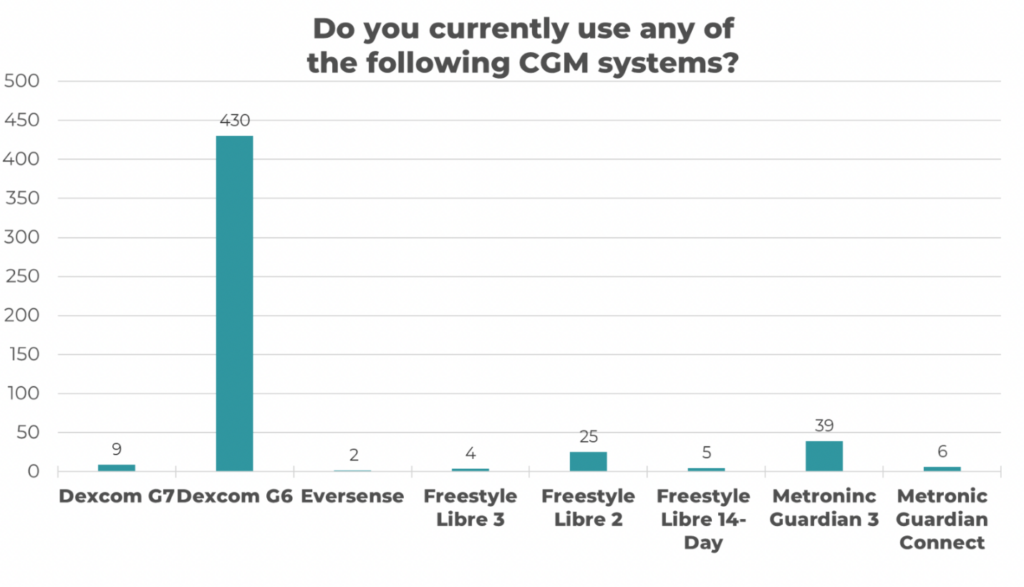
Do you currently use any of the following CGM systems?
There are many people in the T1D community that use technology to help manage their T1D. Our most popular question from this month asked about current continuous glucose monitor (CGM) systems. The most popular CGM system that was used was the Dexcom G6, with 81% of respondents choosing that answer. The least common CGM chosen was the Eversense system, with 2% of respondents using that system. Our community shared in the comments that they are excited about new technological advances happening this year.
Interesting comments from the community included:
- “I currently use Dexcom G6 but am waiting for G7 to interface with Tandem x2. Too bad that they couldn’t start working sooner.”
- “I am actually very surprised at how many people use Dexcom compared to Libre as Libre is much smaller. I also use a Dexcom as that is what was ordered for me when I first started on it 4 years ago. I ordered a Tandem pump because it worked with my Dexcom.”
- “After a while on the Guardian (Medtronic) put my first Freestyle Libre3 on yesterday (for costs).”
- “Libre 2 has been working well for me. So have its predecessors. I find it comfortable, and I like placing it on my arm. The idea of devices on my stomach or under pant legs does not appeal to me.”
- “I’ve used the Medtronic and Dexcom systems. No comparison. Dexcom is much more accurate, for me.”
*Comments have been modified for clarity
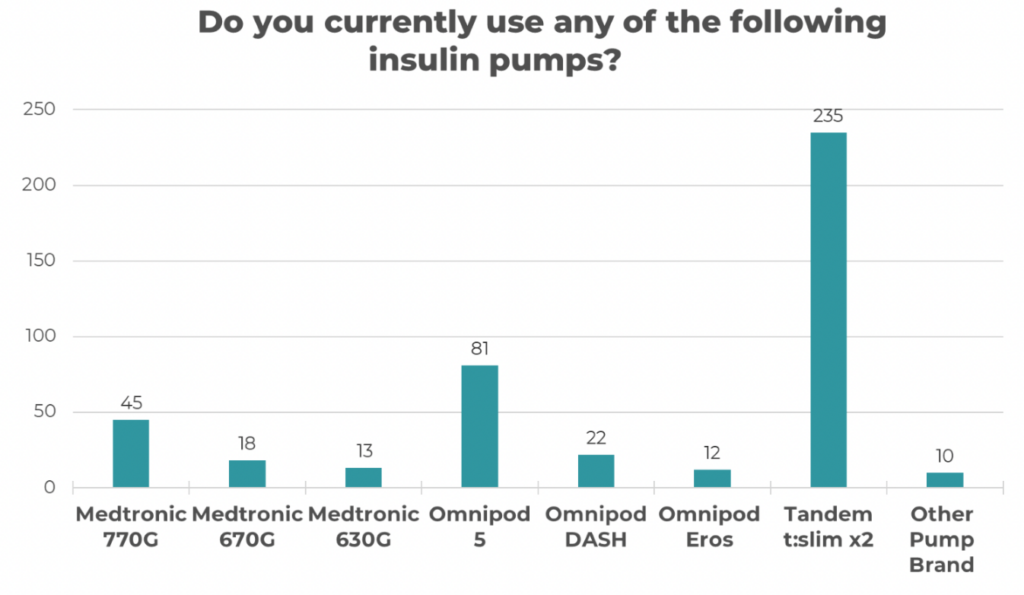 Do you currently use any of the following insulin pumps?
Insulin pumps are another device that many people in our community use. A little less than half of our community, 45%, chose that they are currently using the Tandem t:slim x2 pump system. The least popular pump chosen was the Medtronic 670G system with only 3% of respondents using that device. Pump companies are continuing to upgrade their systems and improve the devices available to people with T1D, which has many pump users upgrading their pumps to newer versions.
Insightful comments included:
- “I was a long-time Medtronic pump user prior to switching to Tandem. The ability to use the Dexcom CGM and have smartphone apps to manage BG was a major factor.”
- “I have been using the Omnipod brand since 2018. Just started the Omnipod 5 in December and I love it! It does take some time for it to learn my patterns but it is doing a really great job of keeping me steady and I am rarely woken up with CGM alarms at night since starting it. I love that it is tubeless and there are several sites where I can attach it and it stays on in water.”
- “My son, almost eleven has been pumping for over nine years, (started two months post dx). We used the 530g until 3 years ago when we switched to Tslim.”
- “I switched to TSlim when Animas left the market. I love it. It’s really not that difficult to change cartridges. I was a little concerned about the battery recharge also, but I have an Anker battery pack that I use to recharge my phone and my pump.”
- “I am a very happy user of the Omnipod 5 and now have much better results after getting things dialed in. It works perfectly with the G6. The only issue for me is that my android phone doesn’t yet have the app to control the 5.”
*Comments have been modified for clarity
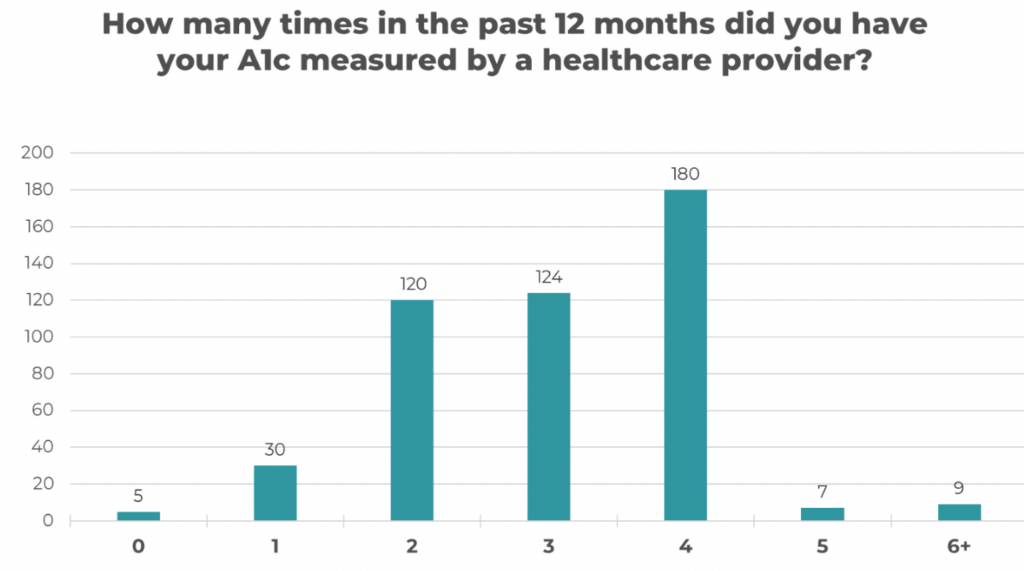 How many times in the past 12 months did you have your A1c measured by a healthcare provider?
Our third most popular question this month assessed the frequency of A1c measurements taken by a healthcare provider. The most popular response from our community was 4 times per year, with 28% of our respondents choosing that answer. Healthcare providers recommend having your A1c taken every 3-4 months as an A1c is an average measurement over the course of 3 months. To no surprise, the second most popular answer was 3 times, with 26% of respondents choosing this option. The comments share the community’s views on getting their A1c taken.
Some of the top comments from the community:
- “On Medicare it’s generally every 3 months but since my A1c has been 5.4 to 5.6 she’s getting by with every 4 months. and I’m Happy!”
- “Honestly, I’d like to have it done more often but I have to go to an external lab prior to the appointment with my primary care because they aren’t using a quick in-clinic A1c machine. It’s tedious! And my endo is a virtual appointment so that would also require an appointment with a walk-in lab. Annoying. I wish it was easier, but I don’t want to leave these two doctors.”
- “See my Endo every three months. Does A1c every visit.”
- “I’ve convinced my Endo they only need it every 4 Months not every 3 because I manage my diabetes well.”
- “3. However, the ads on TV are overhyping it. I know advertising is the art of fibbing responsibly, while TIR and other measures are assuming more prominence.”
*Comments have been modified for clarity
Are you interested in suggesting a topic for Question of the Day? We welcome the T1D Exchange Online Community members to make suggestions for potential Questions of the Day. Please keep in mind that we ask questions geared toward people living with T1D and their loved ones. We look forward to hearing your input and getting further involved with our community.
Click here to suggest a question now!