

 The latest T1D content
 Research that matters
 Our daily questions
 Continue with Google
 Continue with Facebook

Key Takeaways
- Type 2 diagnosis rates are increasing among young people, especially in certain minority groups who are disproportionately affected.
- Research suggests youth-onset type 2 diabetes is associated with a higher rate of condition-related complications.
- Early screening and effective treatment strategies are crucial for achieving the best outcomes in children and adolescents.
The increasing prevalence of type 2 diabetes (T2D) among young people is a pressing concern, with experts calling it an “emerging pandemic.” The Centers for Disease Control and Prevention (CDC) agrees, predicting that if current diagnosis rates hold, T2D in those under age 20 could increase by 70% over the next 40 years.
This trend is particularly alarming given its disproportionate impact on certain populations, including African Americans, Hispanics, and Native American youth, as well as those with lower socioeconomic status.
It’s estimated that 352,000 Americans under the age of 20 (about .35% of that age group) have been diagnosed with diabetes. As type 2 diabetes rates climb, so does the prevalence of prediabetes — a related and more widespread issue, affecting an estimated one in three adolescents aged 12 to 17.
Managing T2D at a young age is challenging, making early screening and effective treatment strategies essential to prevent long-term health issues and improve outcomes in children and adolescents.
Prediabetes vs. type 2 diabetes in youth
Understanding the differences between prediabetes and diabetes is vital for early identification, intervention, and prevention of related health conditions. Let’s take a look at both.
_________________________
Prediabetes is a metabolic condition where glucose (blood sugar) levels are higher than expected but not high enough for a T2D diagnosis. Acting as an early warning sign of T2D, it has become the focus of recent research aimed at understanding how widespread prediabetes is among young people.
Using data from the National Health and Nutrition Examination Survey, combined with participant interviews and A1C and fasting glucose test results, researchers found 32.7% of U.S. adolescents aged 12-17 (or over 18 million young people) had prediabetes in 2023.
________________________
Type 2 diabetes is a metabolic condition where the body isn’t properly responding to the insulin it produces, making it hard to maintain glucose within the expected range.
In youth, T2D looks similar to adult-onset T2D, but it occurs earlier in life. It’s linked with lifestyle factors (such as diet and physical activity), environmental influences, genetics, and societal factors.
_______________________
Both conditions involve insulin resistance — meaning the body isn’t using insulin as effectively as it should. That said, not everyone with prediabetes will progress to developing T2D, and researchers are working to identify who is most at risk.
In a 7-year study of 552 pediatric participants with prediabetes, researchers found 6.5% progressed to T2D, and they held the following in common: higher non-fasting glucose and A1C levels and increasing weight.
The NIH-funded DISCOVERY trial is now investigating which children with prediabetes are most likely to develop T2D and why, aiming to inform early intervention strategies.
What are the signs and symptoms of prediabetes and type 2 diabetes?
With prediabetes, a person may develop acanthosis nigricans, a condition characterized by darker, thicker patches of skin, which are usually seen in skin creases and folds, including the
- neck,
- groin, and
- armpit areas.
At first, it may appear as a “dirty” patch of skin, but cleaning the skin won’t make it go away. It’s linked to high levels of insulin in the body, resulting from insulin resistance, which raises suspicion of diabetes. Often, there are no other physical signs.
With type 2 diabetes, symptoms may develop over time and commonly include:
- Feeling thirstier and drinking more than usual
- Needing to urinate more often
- Wanting to rest more often
- Having blurry vision
What are the primary risk factors?
Researchers have pinpointed several key factors that increase the chance of developing T2D in youth and adolescence:
- Obesity, which is highly associated with insulin resistance
- Inactivity
- Dietary habits or limited access to nutritious choices
- Genetic predisposition and a family history of T2D
Other research suggests that environmental factors — and exposure to diabetes during pregnancy (gestational diabetes) in the womb — can play a role in the early development of T2D.
Puberty timing, whether it occurs at an early age or is delayed, may affect risk. More research is needed.
What are the screening recommendations for type 2 diabetes in youth and adolescence?
The American Diabetes Association’s current screening guidelines recommend testing those who:
- are 10 or older (or post-pubertal, whichever comes first),
- have a BMI higher than the 85th percentile for their age,
- and have one other risk factor (such as signs of insulin resistance, exposure to gestational diabetes, or a family history of T2D).
During the exam, providers should look for skin changes like acanthosis nigricans, evaluate for concerning social drivers of health, and consider whether the individual belongs to a high-risk racial or ethnic group.
The ADA recommends the following laboratory blood tests, with the same goals for both children and adults:
- Fasting glucose test
- 75-gram oral glucose tolerance test OR
- Hemoglobin A1C testing
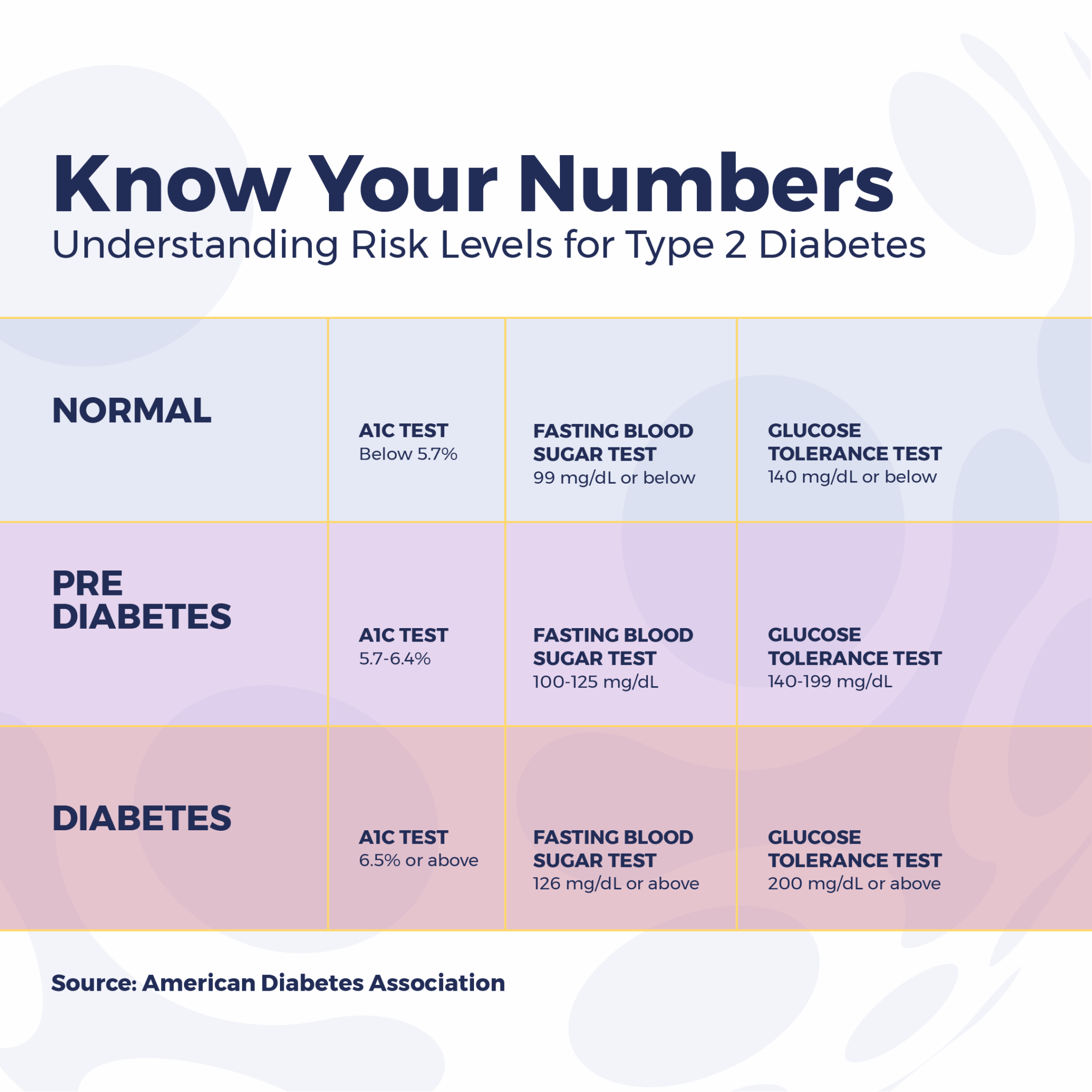
In cases where testing is indicated and results are normal, it should be repeated every three years, or sooner if the BMI increases.
Treatments and interventions may include:
- diabetes education
- lifestyle changes (such as diet and activity),
- weight management, and
- approved medications, including certain GLP-1 receptor agonists, SGLT2 inhibitors, and metformin.
What does research say about risks in young people?
Research suggests that the onset of T2D in adolescence and youth can be more aggressive than its onset in adulthood.
Data from the Treatment Options for Type 2 Diabetes in Adolescents and Youth (TODAY) study and its follow-up, the TODAY2 study, which spanned 15 years and involved nearly 700 participants aged 11 to 17, revealed concerning findings.
By the end of the TODAY2 study, researchers uncovered a higher rate of T2D complications in adolescents and youth compared to adults, including:
- 67.5% with hypertension
- Over 50% with dyslipidemia
- 54.8% with kidney disease
- 32.4 % with nerve disease
- 51% with retinal disease
Moreover, by their mid-20s, over 60% of participants had one or more complications, and 28.4% had more than two. The TODAY Study Group is examining these associations, providing important insights into the severity of T2D in youth, and underscores the importance of catching glucose changes early.
Wrapping it up
Rising rates of prediabetes and diabetes in children and adolescents are a growing public health concern, with early condition-related complications appearing in many by their mid-20s. Prompt screening and early interventions are essential to help curb these issues for the next generation.