

 The latest T1D content
 Research that matters
 Our daily questions
 Continue with Google
 Continue with Facebook

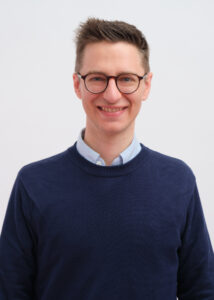 About 12 years ago, Aurelian Briner’s then-girlfriend, now his wife, was diagnosed with type 1 diabetes (T1D). It was a lot to get used to, as neither of them had family members with diabetes. They quickly discovered that meals were one of the most challenging aspects of daily management.
Counting carbs often felt like a lot of guesswork — estimating portion sizes, looking up ingredients, and trying to predict their glucose impact. “One of the main struggles was always around meals,” Briner, 36, recalled recently from his Zurich home as he balanced his infant son on his knee.
He explained that within the frustration around meals, he began to see an opportunity. He didn’t want dinner to feel like an exhausting set of math problems each evening. He wondered whether he could build something that might reduce that uncertainty.
The creation of SNAQ
With his background in business and product management, Briner partnered with engineer Nico Previtali to build a solution.
“When we set out, we thought, ‘There’s got to be better solutions, or at least it’s a problem worth working on,’” Briner recalled. “We believe that there’s a lot of opportunity in managing meals better with diabetes — not just T1D, but diabetes in general and overall health. So much depends on what we eat.”
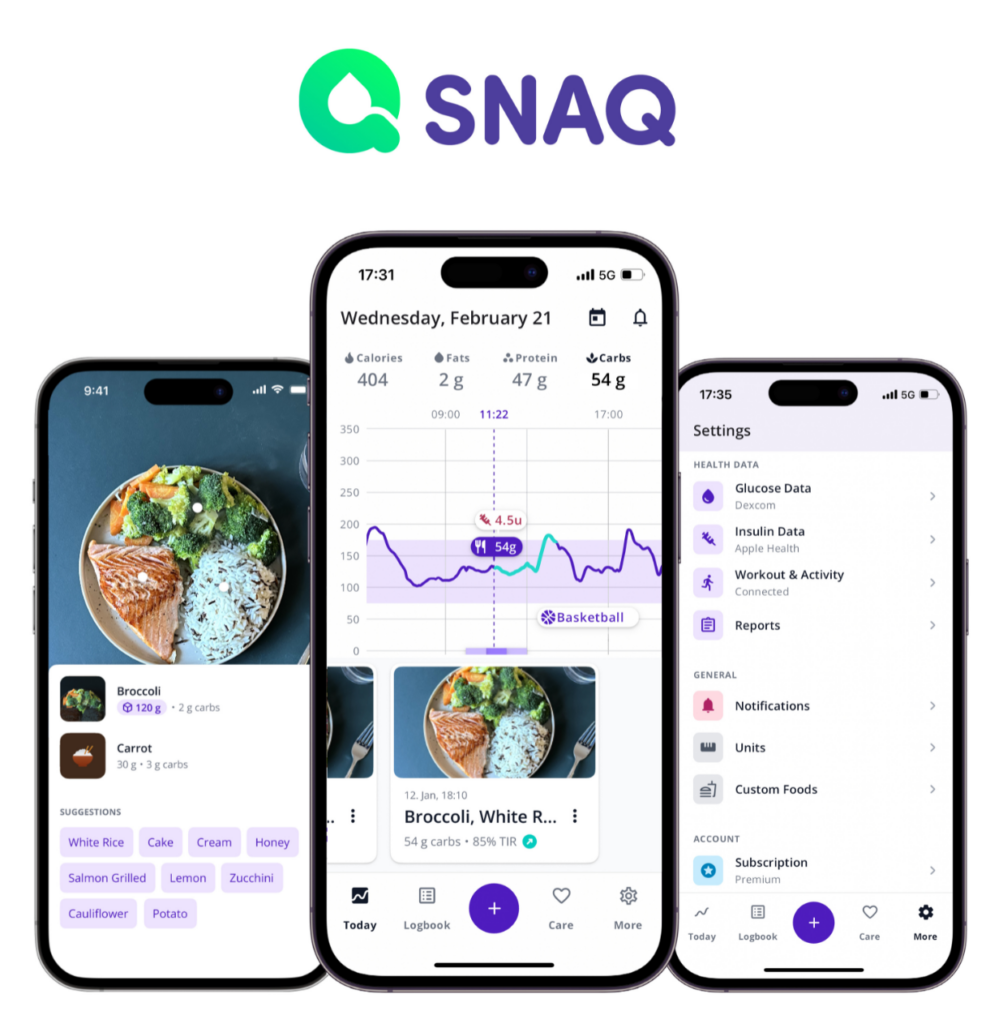
The result was SNAQ, an app that allows users to photograph their meals to estimate carbohydrates and other macronutrients, then connect that data to CGMs and insulin pumps. The platform even has an AI coach that suggests real-time meal options and alternatives.
Since launching in the US in 2022, SNAQ has grown to approximately 250,000 users. Roughly 40% live with T1D and another 40% with type 2 diabetes (T2D). The app’s use continues to expand rapidly, with Briner estimating month-over-month growth of 10% to 20%.
From Personal Frustration to Product Vision
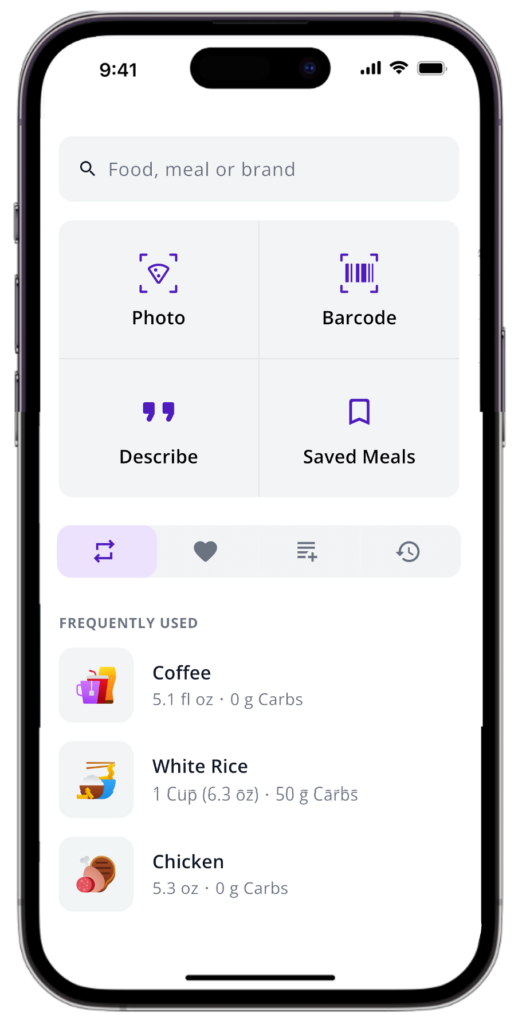
SNAQ’s core proposition is simple: Snap a photo of your meal with your mobile phone, and the app automatically identifies the food and calculates its nutritional breakdown (calories, carbohydrates, fat, and protein).
Then, SNAQ connects it with diabetes-specific data, including glucose readings from continuous glucose monitors (CGMs), insulin pumps, and other activity wearables. “Basically, SNAQ helps you gain insights into which meals worked, and which didn’t,” Briner said, describing it as “a nutritionist in your pocket.”
The company’s tag line, “No more guesswork around meals,” reflects this concept.
In a crowded field of nutrition apps, SNAQ has leaned into clinical validation and research from the start. The company has conducted peer-reviewed accuracy studies and randomized controlled trials examining carbohydrate estimation and time-in-range outcomes.
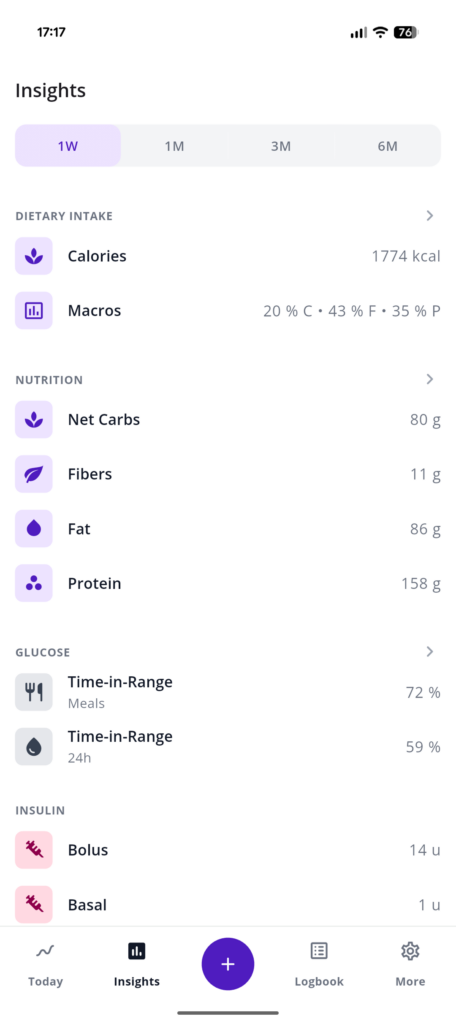 While many food-tracking apps exist, Briner pointed to the depth of SNAQ’s diabetes-specific integration—and an unusually robust body of clinical evidence supporting it.
“We’ve done so much clinical work, which, to our knowledge at least, no other apps in that space have,” he said. “Including peer-reviewed accuracy studies and randomized controlled trial evidence of improvements in time-in-range with people with type 1 diabetes. That’s something that builds up over a long time.”
At the same time, Briner’s careful to clarify the app’s limitations. While SNAQ provides carbohydrate estimates and insights, he emphasized that it’s not approved as an insulin-dosing tool. Because of this, users are encouraged to rely on approved bolus calculators and medical guidance for dosing decisions instead.
The power of the AI revolution
Launching a health-tech startup in his late twenties meant navigating more than algorithms. Funding rounds, tight budgets, and high-stakes decisions quickly became part of daily life. What helped Briner, he said, was that the motivation was personal for him, which he saw each evening at his own dinner table.
“The startup journey is a roller coaster,” Briner said. “Being always able to go back to that initial motivation and being convinced you’re working on something meaningful, that’s what helps you keep on going.”
Artificial intelligence (AI) has always been a bedrock technology for SNAQ. As AI, especially image recognition technology, has rapidly advanced, so has the app. Such tools have not only made the platform more powerful but also amplified the productivity of SNAQ’s six-person team.
“The team feels like it’s actually tripled in size, just because we all got more efficient,” he said. The team is spread across Europe, with members in Switzerland, Portugal, Germany, and Denmark.
A Growing Mission
Even with the company’s success, Briner sees greater opportunity ahead. His vision extends beyond carb counting. He wants SNAQ to become a digital assistant—one that helps people understand how food affects their individual health.
“Ultimately, where we want to go is to be a companion to help you manage your nutrition — a nutritionist in your pocket,” he said. This means more users and a broader audience, but a vision that remains centered on everyday mealtime decisions.