

 The latest T1D content
 Research that matters
 Our daily questions
 Continue with Google
 Continue with Facebook

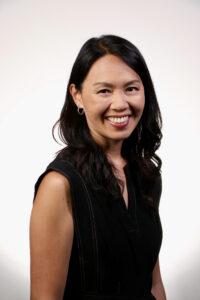 Jenise Wong, MD, PhD, is a pediatric endocrinologist at UCSF Benioff Children’s Hospital in San Francisco, California, and a Professor of Pediatrics in the Division of Endocrinology at the University of California, San Francisco.
Dr. Wong also serves as the Director of Quality and Safety for Pediatric Endocrinology at Benioff Children’s in San Francisco and is the Co-Program Director of the Pediatric Endocrinology Fellowship Training Program. Additionally, she is a Medical Advisor for the T1D Exchange Quality Improvement Collaborative (T1DX-QI) and Chair of the American Diabetes Association’s Membership Advisory Group.
Interview with Jenise Wong, MD, PhD
In this interview, Dr. Wong discusses her role as a physician-scientist, sharing how her experience shapes her approach to diabetes technology, efforts to expand access to care, and initiatives to address disparities in type 1 diabetes management.
The T1DX-QI was established in 2016 with the support of The Leona M. and Harry B. Helmsley Charitable Trust to refine best practices and improve daily life for people with type 1 diabetes (T1D). Growth has been tremendous, with over 60 endocrine clinics from across the U.S. participating in the Collaborative.
Fueled by top leaders in diabetes care, the T1DX-QI has become an engine of innovation and inspiration. By engaging with the T1DX-QI’s shared, data-driven, and systematic QI methods, clinics are achieving measurable success in their approach to diabetes management.
With members working closely together to identify gaps in care, discover and refine best practices, and share research learnings, the process has become knowledge-sharing at its very best. While collated data gives clinics a clear sense of where they are, it also demonstrates where they can be by applying evidence-based methods to improve care.
What inspired your journey into medicine and research?
Dr. Jenise Wong’s path into medicine didn’t begin in the clinic, but in the laboratory. Early in her academic career, she became fascinated by molecular biology and molecular genetics, she explained.
“I was really interested in the mechanisms of disease and wanted to ‘understand how things work,’” said Wong, who at the time imagined a future focused entirely on research.
Her motivation deepened when a friend’s father was diagnosed with a genetic condition — one her friend was also likely to inherit. “It made me want to understand how genetic changes lead to human disease,” she said, “and whether research could give us clues to stop, cure, or treat the condition.”
However, as she completed her PhD in Genetics at Harvard University, her perspective began to shift. She became increasingly interested in seeing firsthand how research was affecting people. That curiosity led her into a cancer biology lab.
There, she worked alongside oncology fellows who seamlessly integrated their roles as researchers and clinicians — and that exposure changed everything.
“Postdocs in the lab offered to bring me on their hospital rounds and to outpatient clinics, where I saw how they blended their life of research with patient care,” she explained. “And I thought — ‘I want to be in front of patients, too.’”
That realization, which came in the latter half of her PhD program, prompted her to take the MCAT and apply to medical school.
She later attended Stanford University School of Medicine, where she found her calling in pediatrics and endocrinology — combining her scientific curiosity with meaningful, long-term relationships with children and families.
Why did pediatrics and endocrinology feel like the right fit?
“I liked the dynamic of caring for a family,” she said. “It’s amazing to witness a child growing from toddler to teen to young adult. I feel privileged and humbled to be a part of that process — and equally as lucky to see caregivers learn and change as their children mature and gain independence.”
For Wong, that relationship-centered aspect of pediatric care was a major draw, but endocrinology added another layer of appeal — one rooted in analytical thinking and molecular research.
“I like thinking about processes,” Wong said. “From a physiology standpoint, what we’re often able to do for people with endocrine conditions seemed very elegant to me in some ways. If a hormone is missing, we can replace it. If there’s too much, we can block it. In reality, it’s not always that simple, but it’s gratifying to have the tools to make these conditions more manageable.”
During her fellowship, she continued working in the lab on mouse models of sleep. “Interestingly, short amounts of sleep are associated with changes in metabolism, including higher blood sugars,” she said — an observation that shaped her interest in diabetes.
“As I progressed through my clinical fellowship, I became fascinated by the tools we had to manage diabetes. When I began exploring diabetes technology, one of my mentors, Saleh Adi, MD, invited me to join discussions on the visualization and usability of diabetes data,” she said, which was interestingly connected to the early years of Tidepool.
While it was a period of rapid innovation in diabetes care, with CGMs and insulin pump technologies evolving quickly, Wong noticed something that troubled her: the benefits of these tools were not reaching everyone equally.
That sparked a question that continues to guide her work today: “How can diabetes technology be more reachable and understandable for everyone?”
“We have all of these diabetes tools,” she said. “However, while some people are able to access, understand, and use them easily, others are not.”
Until then, Wong hadn’t considered becoming a clinical researcher. But the clinical questions she encountered began to pull her in that direction. “While it was a difficult decision, I didn’t want my research to feel like it was 10 steps removed from delivering care and asking questions.”
Those early insights would go on to shape the trajectory of her work as an NIH K12 and K23 grant recipient, focusing on diabetes technology adoption, barriers to access and usability, and health equity in diabetes care.
What research are you most excited about?
“One of the projects I’m most proud of is a joint study with Dr. Jennifer Raymond at CHLA and with Dr. Stephanie Crossen at UC Davis,” said Wong.
The project, called the DREAM study (Device Use Reimagined through Education and Mentorship), is a three-site initiative designed to improve the use of diabetes technology among Latinx adolescents living with T1D.
Funded by an NIH R01 grant and launched in 2022, the study brings together clinicians and researchers across California to explore how culturally responsive education and support systems can help teens and their families feel confident in using diabetes technology — and feel supported in other areas of their lives.
The study’s design was shaped by early conversations with Latinx teens who live with T1D and their caregivers. Many families shared that they had never met another person with T1D, and caregivers, in particular, felt isolated and alone.
At the same time, many were navigating complex, competing demands — from multiple jobs to caregiving responsibilities and financial stressors — making it even harder to navigate the healthcare system.
Those insights highlighted the importance of connection. Building relationships with others who share similar language, cultural values, and lived experiences is an incredibly important source of support — not just for diabetes management, but for overall well-being.
“We know technology can reduce disparities in A1C,” said Wong, “But what we have to ask is, ‘What actually helps people start and continue using that technology?’”
The DREAM program brings adolescents and caregivers together in their own virtual peer groups, where participants discuss diabetes management, technology use, and the psychosocial challenges of living with type 1.
Through early work in the study, Wong and her colleagues learned that families’ needs often surpass “technical” education. Meaning, “It’s not just about teaching how to use diabetes technology,” she said. “It’s also providing resources for management support and addressing other issues like diabetes distress.”
The project reflects a growing understanding of diabetes care — one that recognizes the importance of social connections, shared experience, and peer support — which can be as powerful as clinical advice.
Moreover, the learnings from DREAM align with other efforts at UCSF. “This has complemented other work our clinic is doing, like Campamento Familiar en Español, a Spanish-language diabetes camp, run in partnership with DYF (Diabetes Youth Families),” she said.
“Much of my research and questioning is trying to incorporate interventions like shared medical appointment models from a QI standpoint, while also asking the scientific questions: Can these approaches work across different populations, age groups, and types of diabetes?”
UCSF and T1DX-QI
In 2012, UCSF and Dr. Wong joined the T1D Exchange Registry, and in 2021, they formally joined the T1D Exchange Quality Improvement Collaborative. Since then, Dr. Wong has served as the principal investigator for pediatric endocrinology at both the San Francisco and Oakland sites, alongside Dr. Angel Nip, who serves as a co-Director for Quality and Safety at Benioff Children’s in Oakland.
In 2026, Wong was also appointed as a Medical Advisor for T1DX-QI. In this role, she looks forward to working closely with partner centers across the Collaborative, exploring ways to strengthen engagement and encourage broader participation from clinic teams.
“As a Program Director and someone passionate about training and education, a really valuable part of being in the Collaborative is connecting with others, working together, and developing leadership nationally,” she said.
“Encouraging wider team involvement is an important part of that effort,” added Wong. “It’s not only beneficial for the Collaborative, but it supports personal growth, career advancement, and the success of site-specific projects.”
What have your patients taught you about managing diabetes?
Wong often points to the power of peer connection — and how it can sometimes matter more than medical persuasion for her patients.
“I had a young adult patient who didn’t want to try CGM for years,” she said. “I explained the benefits over and over again.” Then something changed.
“She met someone else with diabetes in college who was using a CGM — and suddenly she said, ‘Okay, I’ll try it.’”
Experiences like this have shaped how Wong thinks about engagement opportunities in diabetes care and their potential impact. “In this instance, peer interaction was more impactful than anything I could say,” she explained. “People often need to see someone like themselves doing it first.”
Moments like these have reinforced her belief that community and shared experience play a critical role in diabetes care — sometimes opening doors that clinical conversations alone cannot.
What is the most rewarding part of your work as a pediatric endocrinologist?
One of the most meaningful parts of pediatric care, Wong explained, is watching her young patients grow into confident teens and young adults.
“I have young adults I’ve followed since they were teenagers or young children. At first, many seem as if they don’t have much to say to me — they’re just coming to appointments with their parents, who are doing all the talking,” she said. “But over time, that dynamic changes. As they move into young adulthood and start meeting with me independently, they often have a new sense of ownership over their health.”
“I love seeing teens, young adults, and even younger children ask questions about their health, be involved in decisions, and advocate for themselves.”
“At some point, usually in their late teens or early twenties, they’ll say, ‘Okay, Dr. Wong, I really need to do something different.” And then we’ll work on setting goals, together.” Seeing that shift is deeply rewarding for her.
“It’s been the greatest joy to watch each patient grow into themselves,” she said, “not just because of their diabetes, but in the person they’re becoming.”
How social and cultural factors are impacting diabetes care
Increasingly, Wong’s work has expanded to include broader social factors that influence health and access to care. Many of the families she works with face challenges beyond diabetes itself — including immigration concerns, socioeconomic barriers, and cultural context.
“Things are happening at home that we don’t always know about,” she said, “especially for immigrant families.”
In some California communities, fear related to immigration enforcement can affect whether families feel comfortable going to medical appointments or pharmacies for life-saving medications and supplies.
“We’re hearing that some families prefer telehealth visits because they’re nervous about traveling to clinics,” she said.
For Wong, recognizing and understanding these realities is an important part of building trust and delivering culturally responsive care — not just for the child, but for the entire family.
What excites you most about the future of diabetes care?
From automated insulin delivery (AID) systems to immunotherapy and early screening, Wong sees promise ahead. But she believes innovation alone isn’t enough.
“While these advances are incredibly exciting,” she said wholeheartedly, “The question is: How do we make sure they reach everyone?”
Even transformative tools, she noted, can unintentionally widen disparities if access is uneven.
“As new technologies and therapies emerge, we need to test them across different populations — across different backgrounds, education levels, and access to resources,” emphasized Wong.
She believes the future of diabetes care depends on ensuring equity keeps pace with innovation. “It’s not just about building new tools — it’s about making sure the people who need them most can actually use them.”
What do you enjoy outside of work?
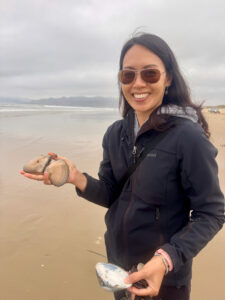
Outside of work, Dr. Wong’s time is largely devoted to her family. With two young children, she’s often found at sports practices and games, dance classes, and outdoor adventures.
As a family, they enjoy camping trips, beach outings, and exploring nature. “My hobbies have kind of disappeared for now,” she joked. “But someday I’ll get back to them.”