

 The latest T1D content
 Research that matters
 Our daily questions
 Continue with Google
 Continue with Facebook

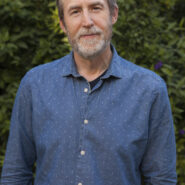
Dave Walton brings a combination of personal insight and professional expertise to his role as CEO of T1D Exchange. As a longtime leader in healthcare innovation and a person who has lived with type 1 diabetes for the past three decades, Dave has long focused on accelerating progress in diabetes research, education, and care.
“We’ve got a lot of exciting things underway right now,” he says of the organization’s current chapter. That includes new grant applications, expanding the impact of its wide-reaching nationwide quality improvement collaborative and health registry of people with T1D, and finding new ways to use that data to drive research and novel population-level insights and power innovation in diabetes care.
Dave’s healthcare journey began long before his diagnosis. While studying psychology at Princeton University as an undergraduate, he loaded up on premed courses with the intention, at first, of going to medical school.
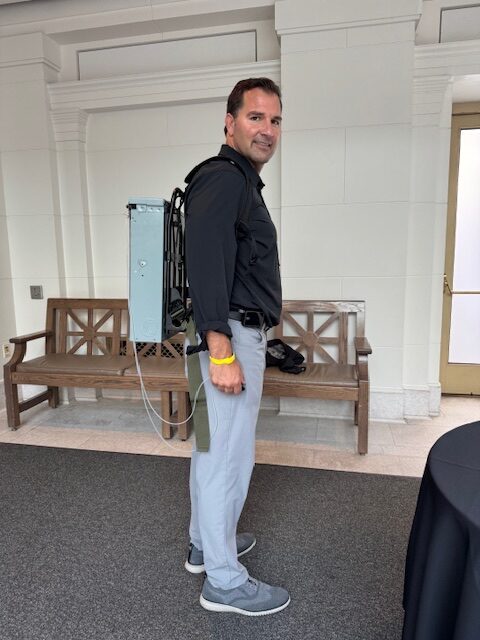
“I thought maybe medical school would be the path,” he recalled. But after talking with physicians who warned him about the realities of managed care, and debating whether to take organic chemistry over the summer, he pivoted toward healthcare consulting and strategy. “I decided that I liked the business of healthcare — working with companies that were making products to benefit people.”
Dave realized that in that role, he could help healthcare providers do an even better job by offering great treatments to patients. That decision launched a successful start in healthcare consulting, working with pharmaceutical and medical device clients on market research and product strategy. Ironically, his very first client project focused on diabetes — two years before he was diagnosed.
T1D diagnosis opens up a new understanding
Dave was just 24 then and pursuing his healthcare MBA at The Wharton School of the University of Pennsylvania when he started experiencing symptoms he had once researched: fatigue, weight loss, and frequent urination. “I actually joked to some physicians who were in the program with me, ‘Doesn’t it sound like type 1 diabetes?’”
They dismissed the idea at first: “You’re too old for that,” they replied. “And you don’t really seem like a type 2 candidate.” But after realizing his 20/20 vision had blurred, one doctor suggested visiting the student health center might be a good idea. Following that suggestion, he discovered his blood glucose was 594 and was admitted to the hospital immediately — but thankfully, he did not experience diabetic ketoacidosis (DKA).
The T1D diagnosis changed his life, but not his direction. Two early experiences helped shape his understanding of living with diabetes. One came from a classmate who quietly shared her own type 1 diagnosis as a teenager. He was shocked that he didn’t know this about her.
“That struck me,” Dave said. “It was helpful to learn that people handle their diabetes differently, in terms of talking about it with others. I’m an open book. I was telling everyone about my symptoms. I’ll tell anyone. She wasn’t.”
The second experience came from a close classmate, Jill, whom he had just started dating. She had worked for a pharmaceutical company that had previously made insulin and had trained to understand what life with diabetes was like. Her knowledge — and her presence at Dave’s bedside after his diagnosis, just days after they had started dating, helped make the experience feel a little less overwhelming. They later married and built a life together in Newtown, Pennsylvania, where they raised two children and still reside.
After Wharton, Dave worked as a healthcare consultant in San Francisco before joining Johnson & Johnson back east. In 2006, J&J acquired Animas, an insulin pump company, and Dave soon transferred over to lead their strategic marketing and new product development planning. Ironically, Dave had just begun using an insulin pump before joining Animas to work on new insulin pump systems.
“It was a whole new world for me, professionally,” said Wharton, who felt like he was in the right place at the right time. “All of a sudden, I went from knowing a couple of people living with T1D to knowing 75 sales and clinical colleagues also living with T1D. What an incredible resource and community to join — I was immersed in diabetes information 24/7 and loved it.”
Dave’s approach to managing his own diabetes — rigorous, proactive, and tech-enabled — mirrored his work. “I created a simple little Excel model that I would type in my glucose values from my glucose meter,” he said. “I’m not going to sit here and feel sorry for myself. ‘Let’s just buckle up and let’s go.’”
“And things were improving. I came in at a good time when better, faster short-acting and long-acting insulins were coming out.”
One of the most influential people early in his diabetes journey, he says, was an educator he worked with shortly after diagnosis. In contrast to the doctors, who told him to keep his dosing the same each day regardless of his meals — as if they didn’t trust him to keep track — she helped him understand the cause and effect of his actions, what he ate, and how active he was, in his diabetes management. “She taught me a lot,” Dave said. “She was very good at her job, and it was clear that education and knowledge are powerful.”
That spirit of empowering people through data and information has guided him ever since: “It’s what people need to integrate self-management into their daily life.”
At T1D Exchange, Dave leads with the same belief: that data, technology, and education — grounded in real-world experience — can drive meaningful change. From advancing research to expanding access to better tools, he is focused on building a more connected and empowered diabetes community. While he believes we still can improve treatments for people with T1D, there is so much potential to use existing products and services to their fullest potential.
Connecting T1D Research, Innovation, and Care
Leading global strategic marketing for insulin delivery at Johnson & Johnson more than two decades ago, Dave had a clear vision for his future: “I knew I wanted to be running a diabetes organization. I wrote that in my long-term goal section of my annual review.”
By the time he left Johnson & Johnson in 2012, he had overseen global marketing for insulin delivery and CGM technologies at Animas and LifeScan, helping launch groundbreaking products such as the Animas Vibe — the first insulin pump integrated with Dexcom CGM technology. But it wasn’t just product innovation that fueled Dave’s path. Living with type 1 diabetes, he felt a growing connection between his personal health and professional mission.
He went on to serve as vice president of marketing and product development at Echo Therapeutics, attempting to develop noninvasive CGM technology for hospital patients, and discovered a passion for working in smaller, more agile environments. “I loved being surrounded by smart people trying to invent new ways to improve health outcomes,” he said.
Then, as Chief Commercial Officer of AgaMatrix, he joined a company that pioneered the first iPhone-connected glucose meter — then created one of the most accurate, Bluetooth-enabled meters with a companion smartphone app. In 2017, he founded Chronicare, a digital health and remote monitoring company focused on medication adherence and smart insulin cap use to titrate insulin better, initially used in those with type 2 diabetes (T2D). The company was acquired in 2019, and by then, Dave had already begun to shift his focus toward something even closer to home: T1D Exchange.
In 2018, he joined the T1D Exchange Board of Directors. “They wanted someone with industry experience and knew that I had T1D, so I joined as the first non-Boston person,” he recalled. At that initial meeting, Dave saw potential — especially in the organization’s efforts to partner with endocrinology clinics to extract EMR data for real-world benchmarking and population-level insights.
Six months later, Dave was invited to lead the organization as interim CEO, and then after another six months, he became the full-time CEO.
A detour becomes the way forward
“I never imagined myself at the helm of a nonprofit,” Dave admitted. “But there was surprising continuity in the mission — using population data and research to fuel discovery. I’ve always been interested in getting insights from data and analytics, and they were building this registry, analyzing EMR data, and recruiting for studies. I saw real potential.”
That potential is now a reality. Under Dave’s leadership, T1D Exchange has grown its population-level EMR database to over 65,000 people with T1D and 40,000 with T2D. It also has a separate online registry connected directly to over 22,000 people with type 1 diabetes.
T1D Exchange is making a meaningful impact, aggregating real-world data across its partner clinics and networks. “It’s unfortunate we don’t have a national health database like many other countries, but pooling that data from all the outstanding centers we work with is part of filling that gap,” he said. “We’re working on projects to promote timely utilization of AID devices post-diagnosis so people get them as quickly as possible.”
That same mindset — actionable insight at scale — applies to study recruitment. “We want to accelerate study recruiting,” he explained. “We’ve recruited for a number of companies developing truly innovative, even curative, treatments, and are trying to speed up the work. We have people from across the country responding to our information about research studies, whether it’s online market research or in-person clinical studies. I feel unbelievably lucky to be at this intersection as a connector.”
And this, for Dave, is deeply personal. “It makes me feel good knowing T1D Exchange is helping a company get a product to market faster because we’ve connected them with participants,” he said. Moreover, a research participant who might be struggling with severe nighttime hypos or an A1C above 10%, for example, may have access to a new therapy in the process. ”The direct connection to individuals and getting them into research is very rewarding.”
Safety in numbers
Throughout it all, data has remained Dave’s guiding principle. “I’ve just always been a numbers person,” he said. Even playing Little League as a kid, every time he reached base, he took a moment to calculate his new batting average. Math created a rational, stable reality.
It’s no surprise, then, that he’s lived healthfully with T1D since his diagnosis. “For me, diabetes is a disease of numbers,” he said. “You can self-manage if you’re paying attention, asking why things happen, thinking about cause and effect.”
However, Dave also knows that not everyone thinks in numbers, and his vision for T1D Exchange is centered around helping those individuals. In other words, “We can make a much bigger impact by helping someone go from an A1C of 11 to 8 than by trying to get me from 6.4 to 6,” he said. He aspires to build tools and insights that are accessible to everyone, regardless of their comfort level with data.
The professional is personal
It’s a mission that extends to his own family. His son is now 25 — almost the same age Dave was when he received his diagnosis. “I just talked to him about why he should get screened for autoantibodies. I’m going to make sure he gets an antibody screening kit. More than half of T1D diagnoses now are in adults, so he’s not out of the woods yet.” His 22-year-old daughter has already been screened and has no autoantibodies.
Looking ahead, Dave is focused on unlocking the next frontier of diabetes care through collaboration with patients, clinicians, researchers, and industry leaders. “What I want to focus on is leveraging large-scale data, advanced data analytics, and techniques to support people more proactively,” he said. “We know what it takes to get someone with T1D to a better spot.”
As someone who’s lived it, studied it, and built companies around it, Dave is leading T1D Exchange with one apparent belief: Every person deserves data-driven diabetes care, and no one should be left behind.