

 The latest T1D content
 Research that matters
 Our daily questions
 Continue with Google
 Continue with Facebook

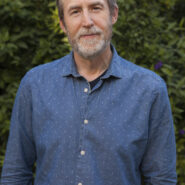
Diagnosed with type 1 diabetes (T1D) at 13, Drew Mendelow turned feeling overwhelmed into action — establishing T1D1, a 501 (c) (3) non-profit organization with an FDA-cleared, free app to help people with T1D calculate insulin doses with confidence.
For Drew Mendelow, receiving a new T1D diagnosis, managing insulin and blood sugars, school, sports, and social life all at once quickly became a heavy burden.
Unable to find an accessible app to calculate insulin doses, he set out to make one himself. The app, T1D1 (which stands for Type 1 from Day 1), worked so well that he decided to release it publicly so others could use it too. What started as a personal tool quickly gained traction, reaching 45,000 downloads in just six months. He knew he was onto something.
Despite the initial success, it was dropped by Apple from the App Store because it lacked clearance from the Food and Drug Administration (FDA). Determined to give others access to the app, Drew worked throughout his high school years, recently winning regulatory approval. Five years on, FDA-cleared T1D1 is back, and Drew, now 18 and a freshman computer science major at Georgia Tech, is working to expand its reach.
“Whenever some kind of problem happens to me, or I have something that’s kind of giving me a burden, I always look for a solution, and for me that was T1D1,” said Drew, who went on to explain, “When I was diagnosed, I was overwhelmed, so I developed this app. I like having control of my own life. And my mission is to allow others to have the same by removing as many barriers as I can.”
To that end, Drew said he is committed to keeping his app widely available, simple, and free — with no advertising. The goal, he said, is to help as many people living with T1D as possible.
From hospital room to App Store
Drew’s idea for T1D1 began to take shape while he was still at Children’s National Hospital in D.C., near his home in Gaithersburg, Maryland, at the time of his diagnosis.
“I was thinking, there has to be some kind of app for this already,” he said.
But everything he found was connected to some type of diabetes device, like an insulin pump or pen — and most had associated fees. “There was really nothing,” he said, and after spending time coding video games the previous summer, he thought, ‘Maybe I could try making this myself.’”
In the hospital, he joked with his doctor about making an app. “It was a friendly joke, I wasn’t being serious, really,” Drew said with a smile, talking from his Georgia Tech dorm room, recalling that day five years before. “The next day, when I went home from the hospital, I started messing around on my computer, figuring it out, thinking, ‘Yeah, I probably could make this app.’”
For Drew, his diagnosis came without warning signs. “It was crazy because I felt completely fine,” he said. Seeing his doctor because he had mysteriously lost 10 pounds, he learned his blood sugar was dangerously high and was sent straight to the hospital.
“After getting diagnosed, those next couple of weeks were a big learning curve for me and my parents, really,” he said. He called his grandmother, who also has T1D, often for advice. “She was super helpful for those first couple of weeks. Still, having school and soccer practice, l had to manage this disease myself. Even if my parents were there to help me, I was pretty independent.”
And all the while, he was fine-tuning T1D1. “I think developing the app really did help me be more confident and also just kind of cope with the diagnosis itself,” said Drew.
Just a few weeks in, he had a working version that could calculate and track his insulin needs. “That’s when I thought, ‘Why not release it to the public?’”
“I know from my experience how overwhelming this was for me. There must be plenty of other teens in the same situation, even adults and younger kids.” So, he uploaded it to the App Store, hoping to fill the gap.
How does T1D1 work?
Drew describes the T1D1 app as a simple bolus calculator designed for people on multiple daily injections (MDI). Users enter their blood glucose and carbohydrate intake, and the app calculates an insulin dose based on their personal settings.
“I know how overwhelming it can be, especially as a teenager. When, for example, I’m in school, and I have to open my phone in the middle of a test, and calculate insulin,” he said.
“T1D1 is there to help manage the burden by calculating how much insulin you need, tracking it very easily, and sending it to your medical providers.”
An important aspect of the app is its shareability, which allows users to log data and provide access to parents, caregivers, and their healthcare team through a shared account.
T1D1 doesn’t connect directly to CGMs or pumps. Drew’s aim was to keep it simple and accessible, particularly for those newly diagnosed or in need of a backup for pump failure.
The long road to FDA clearance
When Apple removed T1D1 from the App Store, it was a blow, Drew recalled. The challenge launched him on a multi-year journey through regulatory hurdles that reshaped the app and tested his entrepreneurial skills. Through networking and innovation competitions, Drew was introduced to supporters who funded and guided him through the FDA approval process, often juggling investor, regulatory, and development calls between his school classes.
Working with a professional software team to rebuild the app to medical standards, he completed extensive documentation and cleared a costly human factors study with help from Dexcom.
The T1D1 app received FDA clearance in August 2025, becoming the first free, over-the-counter insulin calculator app for type 1 diabetes in the US, gaining several thousand new downloads in the first few months of its release.
For Drew, the effort was all-consuming, but he never considered giving up. “This is my product — my baby,” he said. “During the first six months, I saw huge success. I was getting emails daily, even multiple times a day, from people telling me how much the app had helped them.”
He said the regulatory process not only improved the app, but that FDA clearance was essential for hospitals, educators, and newly diagnosed families who trust and use it.
A mission rooted in access
T1D1 is free and ad-free — a decision Drew considers central to his mission of removing barriers, not adding to the existing burden. The goal, he explains, is to remove barriers such as cost, complexity, lack of Wi-Fi access — or limited experience with dosing calculations.
Stories from users have reinforced that mission. One that stands out to Drew came from a parent who shared that using T1D1 made her feel comfortable with her child staying overnight with grandparents. This is a powerful example of how a simple tool can restore confidence and independence. “That was just heartbreaking for me,” Drew said. “It’s literally allowing families to be together and feel confident together.”
Looking ahead, Drew hopes to expand T1D1 internationally, particularly in regions where MDI is more common — and access to diabetes care is more limited, such as in India and Pakistan. The app was previously available in 74 countries, and he’s working toward navigating new regulatory pathways and translations to reach users globally again.
Life with diabetes—and beyond
Today, Drew uses a Tandem T-Slim with a Dexcom CGM and feels he’s found a rhythm that works, even with the unpredictability of college life and managing T1D1.
Alongside classes, he’s involved in the Yellowjacket Space Program at Georgia Tech, where he helps launch student-built rockets, and with the school’s iOS Club, where he develops apps as part of a larger team.
Drew said he loves finding solutions, and T1D1 was born out of that instinct. In a moment of distress after his T1D diagnosis, Drew created a tool that is now helping thousands of people manage T1D with confidence.
“The main thing I’ve learned about myself is that I really like to solve problems,” he said. “That’s the root of my passion and interest, even outside of the healthcare space, just for computer science in general. I see a problem, and instantly I think, ‘How can I solve this?’ ‘What can I do about it?’”