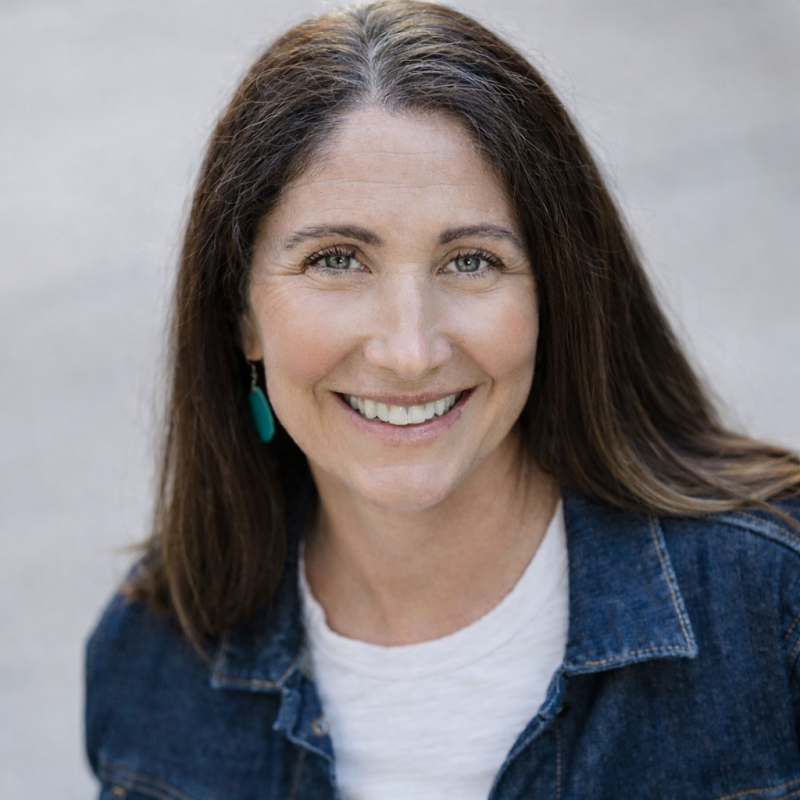
When Jeff Kolok’s 4-year-old daughter Johanna (JoJo) was diagnosed with type 1 diabetes (T1D) in 2005, he and his wife, Natalie, suddenly found themselves navigating the daily challenges of managing T1D.
At the time, managing T1D in a young child meant frequent fingersticks and middle-of-the-night checks. Advanced technology was still years away. Kolok recalls trading overnight shifts with his wife, who worked as a flight attendant, to check on JoJo.
Just a year after her diagnosis, the Koloks’ journey took an unexpected turn when they reached out to Vermont’s Division of Children and Families, offering to provide temporary support for another child living with T1D.
That’s when they were introduced to Nick, a 6-year-old boy in foster care who was diagnosed with T1D in 2006. The following year, the Koloks made it official, with adoption in 2008.
With JoJo and Nick only 36 days apart in age, the two became something like twins — and just like that, the Koloks were raising three children — two of whom were living with T1D.
Reflecting on those early years, Kolok describes the technology as “caveman-esque.” Even though T1D management has changed significantly since then, he says one thing hasn’t: the disease itself.
“While the toolbox keeps getting bigger and the tools keep getting better, the disease is still the disease — and the mental load hasn’t gone away,” he says. “And to some capacity, with technology management, it’s probably gotten a little heavier.”
This awareness — that better tools don’t erase the burden of T1D — is part of what drives the Koloks’ work with SLAMT1D, the nonprofit organization they founded to support people living with T1D, raise awareness, and help keep T1D on the sidelines while people stay active in the games and activities they love most.
What was the moment you realized SLAMT1D needed to exist?
[Jeff Kolok]: You know, along the way, we were getting more and more involved. We were meeting various people, constantly hearing about the difficulties and strains T1D dumps on families, and we felt compelled to do more — to keep doing more. There was so much conversation about a cure, but we weren't seeing it.
So, we just decided that we were going to shift.
We just thought, you know, we can make a difference, a real difference in the lives of people living with this disease. But we need to do that in the here and now.
I'm not one to “comfort my way through” something. I'm more apt to do something about it, however I can — so that's what we set out to do with this disease. I wanted to be on the front line, impacting lives.
Our family has always been sports-oriented. So, as it relates to what we do in sports, the phrase we use is: “We want to keep T1Ders in the games and activities they love, and keep T1D on the sidelines.”
The name "SLAMT1D" is memorable and energetic. What's the story behind it?
Before launching the nonprofit in 2014, we had the idea brewing for a while. What we wanted to do was use sports as our vernacular — as our vocab and driving vibe.
Initially, we called it SLAMDiabetes. We wanted to draw people in and create awareness and conversation about type 1 diabetes.
When we actually created the nonprofit, I wanted to use an action word that was about “kicking T1D’s butt.” So, SLAMT1D represents the change we wanted to effect.
We started with a wiffle ball tournament held at a quarter-scale replica of Fenway Park, built by Pat O’Connor, a former IBM executive and huge Red Sox fan. It was kind of like bringing the big league to the backyard. I just loved the combination of it all.
In that first tournament, we raised nearly $10,000. We thought that was pretty decent, but it got us thinking about what’s next.
Did you imagine SLAMT1D would grow into what it is today?
I don’t know if “imagine” is the right word. What I mean by that is I just don’t have a rearview mirror on my windshield. In terms of life, I’m always driving forward.
Have we looked back and said, “My gosh, has it come to this?” Yes, of course, we’ve had those conversations, but it’s never really present in my thinking.
Today, players come from all over the country. The Summer Classic tournament always takes place the first full weekend in August. And we’ve now added a one-day tournament in September, the Fall Classic.
The 2026 Summer Classic hosted 30 teams, 2 exhibition teams, a kids’ game with 2 teams, and a home run derby. It’s raised over $570,000 (and counting) with a goal of raising $600,000 for what has now become a full weekend of events.
How do you define success for SLAMT1D beyond dollars raised?
Programmatically, it’s not about sports. It’s about changing lives. It's about being in the here and now.
Take Connecticut Children's Hospital, which has roughly 1,700 T1D families in its catchment area and partners with Yale New Haven Hospital, which has another 1,300 families in its catchment area.
They’ve teamed up with the YMCA of Meriden to run two consecutive one-week day camps for kids with T1D, but they struggle to get kids from the inner cities of Hartford and New Haven, Connecticut, to their endocrinology appointments — and to embrace the idea of going to camp.
It only took one meeting, and I said, “We're in, here's what we'll do. You say your capacity is 40 kids, so we’ll cover an additional 40 kids over the two weeks. We’ll also cover 100% of the camp fees for those kids, and on top of that, we'll pay for busing from both of those cities to the camp round-trip every day.”
We’re also talking with them about how we can help increase appointment attendance. So really, it has nothing to do with sports.
But by the same token, we’ve done an awareness game at Wright State University in Dayton, Ohio, for a young woman with T1D who was a guard on the women’s basketball team. Not as a fundraiser, but again, to raise awareness.
Are there any initiatives you’re especially proud of?
We have something called the “Use the Tools” grant, where we'll give a two-part cash incentive to a young teen or a young adult who isn’t quite there with using an AID system.
We heard it from our own daughter, who said, “Dad, I've already got one device on me. I don't want another when I'm wearing a bathing suit. I already feel like a robot.”
But we know AID systems can help improve glucose management. So, we provide cash stipends if someone tries it for three months. And even if they say they don't like it afterward, they still get the other half of the stipend.
We also just hosted a 1-day T1D Immersion Workshop — as part of a 3-day continuing ed conference — for school nurses. There were 75 nurses in attendance, with speakers including Joe Solowiejczyk, Gary Sheiner, and Anna Sabino.
What have you learned about bringing people together around a disease that can often feel isolating and difficult?
I'll tell you, I mean, one of the other things that underpins everything we do is that — as you well know — on the day of diagnosis, a whole dose of fun and freedom is robbed from that person and their family.
Because of this, we want to make sure we infuse everything we do with fun. Wherever we can, we add competition to make it more fun for everyone.
We’ve always held that the most important letters in the term “fundraise” are the first three: F. U. N.
What have you learned about bringing people together around a disease that can often feel isolating?
Half the teams in our tournament have no personal connection to type 1 diabetes whatsoever, yet they raise hundreds of thousands of dollars for people with T1D. It’s remarkable.
It’s become one giant SLAMT1D family that keeps growing because fun, friendship, and support are at the core of everything we do.
Are there any stories from participants that have stayed with you over the years?
Any one of them is going to get me choked up. So, I’ll tell you about a few poignant ones.
One of the things we do at our SLAMT1D Summer Classic Wiffle Ball Tournament at Little Fenway is to host a home run derby. It's similar to Major League Baseball's Home Run Derby, where the top 16 home run hitters in the tournament come together for a friendly competition to see who hits the most home runs.
People in the crowd can pledge money based on the number of home runs. And within 30 minutes, we raised thousands of dollars.
In the year leading up to the tournament, we identify a family or an individual with T1D who's gone through something extremely difficult. Three years ago, it was the Wheelers, who have a child with type 1 and whose house and T1D supplies were washed away in the Vermont floods. We raised $12,000 for them.
Last year, the mom of a five-year-old with type 1 diabetes and Down syndrome experienced sudden domestic issues and needed to leave her home. That year, the Home Run Derby raised $6,200 for her and her family.
This year, our recipient is an 8-year-old girl from Manchester, New Hampshire, who was recently diagnosed with T1D and who, a few weeks prior, lost her dad. Her mom is mostly Spanish-speaking and was struggling to arrange appointments and supplies and navigate insurance systems, all while working the night shift. Blue Circle Health reached out to see if there was anything SLAMT1D could do.
And I said, “We're on it.”
After meeting with the mom and her daughter’s T-ball coach, who acted as an interpreter on a Zoom call, I said, “Here's what we're going to do. We're going to get you a $2,500 check right away. Then, we're going to name you the beneficiary of our Home Run Derby.”
The Home Run Derby raised a record $13,195 for the little girl and her family — who attended the Summer Classic and witnessed the outpouring of support for them. There were tears all over the place!
What’s something people are always surprised to learn about SLAMT1D?
One of my favorite movies is Butch Cassidy and the Sundance Kid with Paul Newman and Robert Redford. At some point, the two of them are looking out over the expanse to see a marshal and his posse in unrelenting pursuit. Paul Newman looks at Redford, and he says, "Who are those guys?“
I love that phrase, and it applies to us because we’re the entity no one knows about, and we just show up.
I mean, people go,” Wait a second, you're doing basketball scholarships for T1Ders out of California, Texas, Colorado, and New Jersey? You're holding a school nurse workshop? You've just helped a little girl in Manchester, New Hampshire? You've done this thing in Connecticut?”
They're stumped!
What jazzes me is making the impacts and seeing the people we’ve touched — and how they carry that forward and help other people, too.