The Diabetes Link is entering a new phase of growth, backed by a $1.5 million grant from The Leona M. and Harry B. Helmsley Charitable Trust, with a focus on reaching and supporting more young adults with diabetes, finding them not only in colleges, but also at community colleges, trade schools, and other youth organizations.
This shift is fueled not only by the grant but also by an expansion of the organization’s vision: a recognition that today’s younger generation, coming of age with diabetes, needs its own kind of connection, support, and validation. The Diabetes Link must evolve to reflect their world rather than its own past.
As part of this revisioning, The Diabetes Link has promoted Caitlin McGillicuddy, its VP of Marketing and Programs, to the newly created role of Chief Operating Officer to lead the charge.
With a mission to serve young adults ages 18 to 30 living with any type of diabetes, The Link built its identity on college campuses. For years, its core program relied on student-led chapters that formed when someone started a club on campus. But that model had its limitations.
"That means the top of our funnel of who we're reaching is so small," McGillicuddy said. Many young adults who could have benefited from The Link’s resources were never reached.
"Fewer and fewer young adults are attending four-year colleges," she said.
"The cost of college is becoming more inaccessible, and many more are exploring trades and community colleges. What we want to do is show up in the area where we know there are people we're trying to find, learn about them, build relationships with them, and then leverage that learning into providing support in the way that's going to be most meaningful for them.”
A grant to fund the future
To help get there, the organization plans to use a just-announced three-year, $1.5 million grant from The Helmsley Charitable Trust designed to fund that broader vision. It’s a matching grant, meaning it's designed to attract additional giving for sustainable growth over time.
"We need this investment so we can do the work we want to do," McGillicuddy said. “My goal is that by the end of this grant, we'll have a playbook for how to expand into this market of community colleges and trade schools to reach these students.”
The extra resources will go mostly toward growing staff and hiring the people needed to build relationships with community colleges, trade schools, and community-based health organizations, she said.
Expanding its reach is just one part of the organization’s broader strategy to support young adults with diabetes. The Diabetes Link has also been collaborating with the American Diabetes Association to develop a multimedia experience for newly diagnosed young adults, which McGillicuddy hopes to launch this year.
A new role, a bigger vision
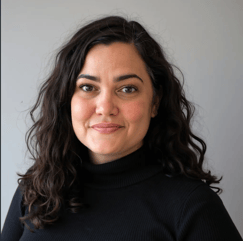 McGillicuddy joined The Diabetes Link in 2022, shortly after the organization changed its name from The College Diabetes Network. The rebranding spoke of an ambition to become, as McGillicuddy said, “the authentic voice of young adults” everywhere — not just on college campuses. It was a challenge that appealed to McGillicuddy.
After Manny Hernandez became CEO in November 2024, he and McGillicuddy began shaping the organization’s next chapter. "What we discovered pretty quickly is that Manny needs to be completely external," she said. "I'm running the business, Manny is growing the business."
Today, The Link has about 13 staff members, serves around 160 campus chapters with more than 1,200 registered members, and connects with tens of thousands more through its alumni and digital community. In the coming years, that profile might look very different.
“We need to define and refine where the organization is going,” McGillicuddy said. “I felt very strongly that we needed to really double down on who we are and why we have to exist in this space. We have to exist as the authentic voice of young adults, and expand to serve under-insured or under-resourced populations.”
Painting every stair a different color
McGillicuddy comes to the new role with an eclectic background, including a decade of fundraising for an at-risk youth nonprofit, running a children's museum, a stint building a real estate team in Florida, and her years running marketing and programs for The Diabetes Link. Along the way, she has raised two daughters, 16 and 11.
The one thing that has remained constant has been her passion for young people, building organizations, and creating spaces where people thrive. And through it all, she has kept her identity as a creative.
Describing herself as “an artist who tries to work in business,” McGillicuddy said, “What I came to understand is that I’m really good at pulling an idea out of the air and bringing it to life.”
That became evident when she became the executive director of the Children’s Museum of Easton, then housed in an austere, historic fire station. She bought every color paint she could find, transforming each molding, trim, and stair a different color — to the bewilderment of staff members who had only ever known the building’s muted palette.
"I remember them looking at me like, ‘Who is this woman?’"
Over time, she has learned how to harness that energy to help organizations expand their impact: “Coming into a small organization where I can really get into the middle of things and get my hands in it and use my brain in all these different ways, and then actually get to do the work as well, is what motivates me.”
Using her superpower to see what others don’t
Although she doesn’t live with diabetes herself, McGillicuddy said leading an organization that serves the diabetes community has been a powerful and sometimes challenging dynamic. At first, it was hard not to have imposter syndrome, but early on with The Diabetes Link, Interim CEO and Board Member Marie Schiller told her something she never forgot.
“She said to me, ‘Caitlin, the fact that you are not in this diabetes echo chamber is your superpower because you're pointing out things that nobody can see anymore,’” McGillicuddy said. “We're trying to educate people who don't know anything about diabetes, using terms like DKA and CGMs that nobody knows.”
It turned out that McGillicuddy’s outsider perspective was the right fit for an organization dedicated to helping young people learn about their diabetes without presumptions or judgments. That kind of creative, curious sensibility has also helped the team pivot its attention beyond conventional venues and meet young adults where they are.
McGillicuddy said working to empower young people requires seeing change not only as inevitable but as a necessary good. “What that means is a commitment to constantly be evolving,” she said, “because we, as the people in leadership, are always getting older, and they keep getting younger.”
The work of authentic connection
Today’s younger generation is not a copy of her own, McGillicuddy knows. To reach young adults, she is focused on finding ways to foreground their specific experiences as they shift and evolve in a fast-changing world.
“They need to be listened to, and they need to be involved in the conversation,” McGillicuddy said. “This is an age that has grown up through a global pandemic, and a lot of political instability — they've had active shooter trainings and ubiquitous technology their whole lives. I think a lot of us who are making decisions, leading organizations, and leading businesses are so far removed from the actual lived experience of young adults today.
McGillicuddy said the result can be performative, tone-deaf campaigns trying to connect with young people. Her job now is making sure The Link avoids this trap.
“If we want to connect with them, if we want to serve them, if we want to know them — then we have to stop assuming that we know better,” she said. “As members of older generations, we can forget that the world we grew up in doesn't really exist anymore. We have to adapt to their world. That's what they need. They need to be listened to, they need to be taken seriously. And it needs to be authentic.”