For people living with type 1 diabetes (T1D), insulin pump technology has seen significant advancements. Yet a persistent challenge remains: knowing when insulin delivery has been interrupted.
Unlike those who inject long-acting insulin, insulin pump users rely entirely on rapid-acting insulin. As a result, when insulin delivery is compromised, blood glucose can rise quickly. If the issue is caught early and addressed promptly, it can help reduce the risk of ketones and diabetes-related ketoacidosis (DKA).
Sometimes, that’s easier said than done. Insulin pumps don’t always detect delivery failures right away — and the cause can be a combination of factors. Plus, you can’t visualize what‘s happening beneath the skin, so figuring out the cause often turns into a guessing game.
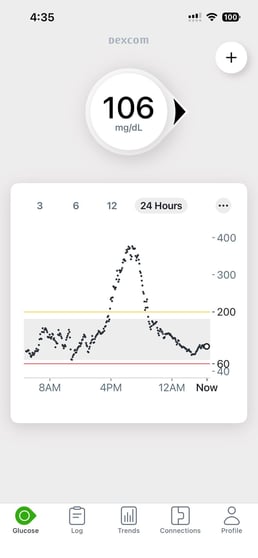
For many people, that process is all too familiar. If you live with T1D, you have likely experienced stubborn high glucose that won’t respond to correction boluses, only to realize hours later that the issue is bigger than needing more insulin — it’s time to replace an infusion set or a patch pump.
Reality is that by the time an occlusion alarm sounds — if one sounds at all — your continuous glucose monitor (CGM) may have been waving red flags for hours. Researchers agree that delayed detection of infusion site failures is one of the biggest safety challenges for insulin pump users, despite advances in automated insulin delivery (AID) systems.
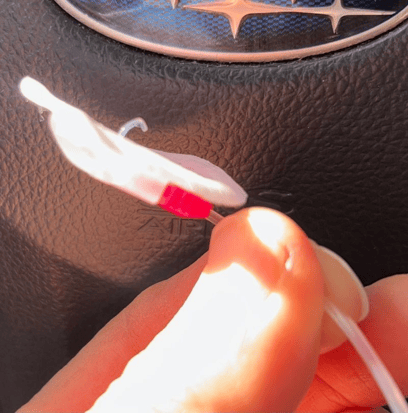
An insulin pump site failure may look something like this when you remove a site from your skin, and correspond with a glucose excursion on your CGM.
Why are occlusions so hard to detect?
Most insulin pumps detect occlusions indirectly by monitoring pressure inside the infusion system, but this method is far from perfect.
One major issue is that pumps deliver insulin in very tiny amounts, and insulin needs vary from person to person. As a result, it can take hours for enough pressure to build up and trigger an alarm — especially for people who use smaller amounts of insulin.
That’s why you can have a completely kinked infusion site without receiving an occlusion alert. To complicate things further, insulin can also leak around the site and go undetected.
Given these circumstances, people with type 1 diabetes — and their caregivers — often become diabetes detectives, investigating and solving problems themselves.
Is it:
- A kinked infusion site?
- Air bubbles in the tubing?
- Insulin leaking around the site?
- Scar tissue?
- Spoiled insulin?
- A meal miscalculation?
- Illness?
- Stress?
The first signs can be different for each person:
- Feeling “high”
- A rising CGM trend
- Physical symptoms like fatigue, thirst, increased urination, and achy muscles
- Glucose that seems completely unresponsive to correction doses
A study by T1D Exchange of 248 adults, conducted between June and July, 2025, found up to 89% of insulin pump users experienced an unexplained high glucose level (greater than 250 mg/dL). Yet only a fraction of those with more than one unexplained high — about 3% — triggered a pump occlusion alarm.
Most reported relying upon CGM (70%) or physical symptoms (20%) as their reliable detection systems.
Those findings, along with other expert discussions, highlight why infusion site failures remain a significant unmet need in insulin pump therapy.
When you’re the pump detective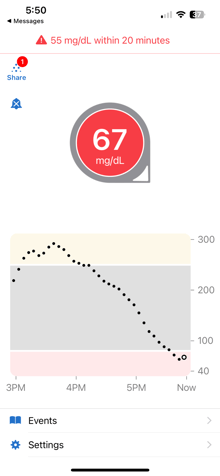
Not every delivery failure is caused by occlusion. Problems can also stem from:
- Sites that unknowingly become detached or pulled out of your skin
- Bent cannulas that restrict insulin flow without fully blocking it
- Infusion sets becoming loose and detaching
- Insulin leakage around a site or patch pump
- Spoiled insulin
- Insulin pump malfunctions
In other words, there are plenty of ways for insulin delivery to fail without triggering an alarm.
Relying on gut instinct
Until insulin pumps have better detection systems across brands and pump models, people with T1D continue to rely on their experience, pattern recognition, and instinct.
Over time, many people develop habits to catch them earlier, including:
- Avoiding infusion set changes before bed
- Steering clear of problem areas (scar tissue)
- Not changing a CGM and pump site simultaneously
- Investigating unexplained highs early on
- Following the golden rule: When in doubt, change it out
While none of these habits can prevent these situations entirely, they can shorten the time between recognizing a problem and fixing it.
A new approach: Measuring insulin flow directly
One company is taking a different approach.
The Sequel Twiist™ automated insulin delivery (AID) system uses iiSure™ ultrasonic sensing technology to measure insulin flow and volume in the pump.
Instead of relying solely on motor movements or pressure changes, the system uses sound waves to monitor the actual movement of insulin. According to testing published by Sequel, the system can detect flow abnormalities up to nine times faster than conventional pumps.
Even so, it can’t detect every delivery failure, such as a disconnection — but it represents one of the first major changes to insulin delivery sensing in years.
The concept is compelling, and it’s a different way of thinking about the safety of insulin delivery: measuring insulin flow directly rather than waiting for pressure to build inside the system.
For people with type 1 diabetes, it could be a meaningful shift.
What comes next?
Earlier flow detection is only part of the future. Another promising technology development is continuous ketone monitoring (CKM).
As CKM becomes more widely available, it could offer another layer of protection for insulin pump users by detecting rising ketones before insulin delivery failures become medical emergencies.
The goal isn’t just better alarms. It’s reducing the hours of uncertainty between an insulin delivery failure and its recognition — helping people avoid prolonged high glucose and ketones, and the accompanying frustrations.
Technology that can detect insulin delivery problems sooner — before there are significant changes in glucose — could make a meaningful impact on the lives of those with T1D who have long played “detective” with their health.